Our Expertise in Detail
Thermal
From steady state to rapid transient, we master the thermal phenomena that dimension your systems and condition their safety:
Thermal transfers
Modelling the three modes of transfer: radiation, conduction, natural and forced convection.
Dynamic behaviour
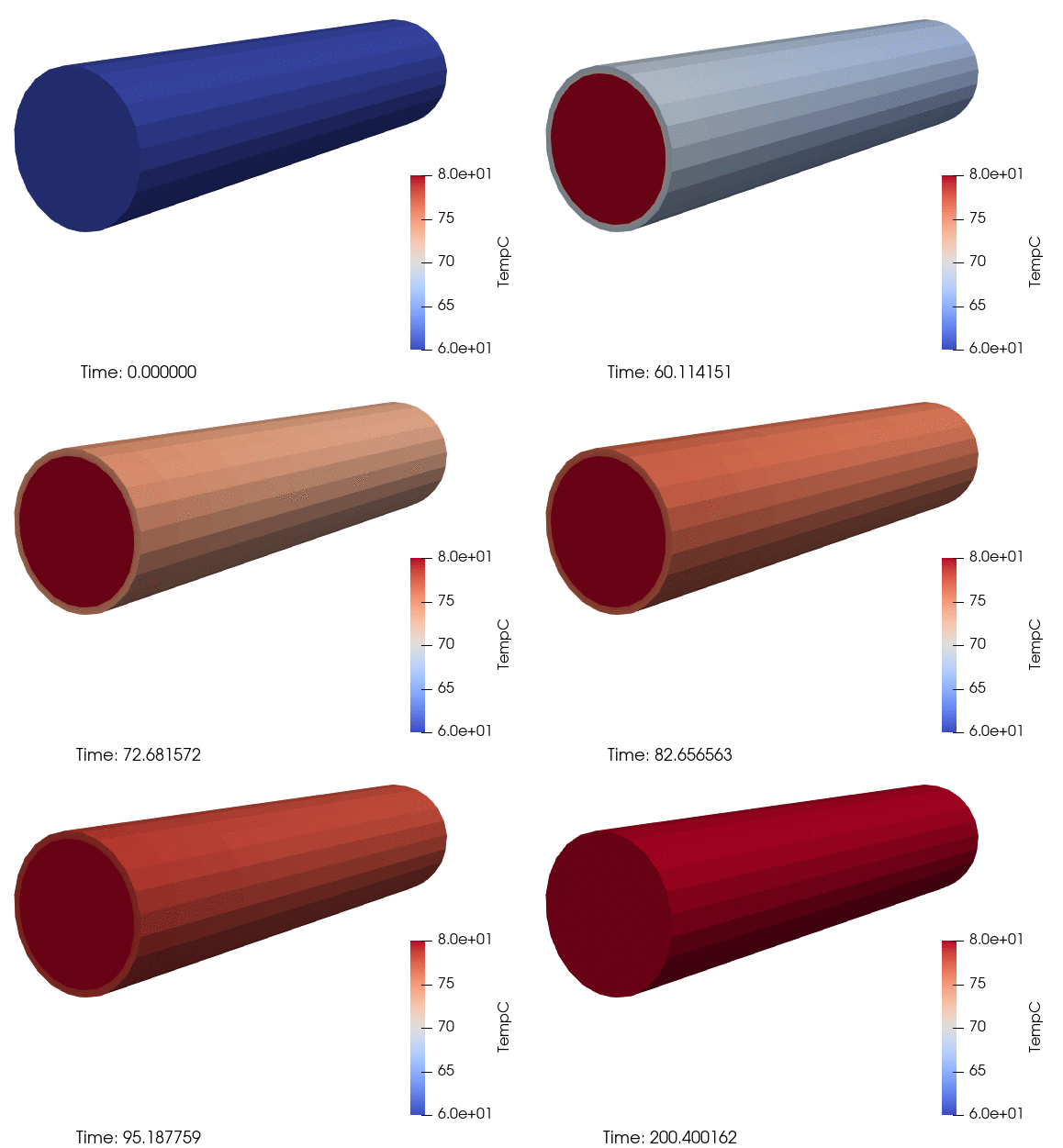
Analysis of thermal transients: grace periods, heating times, thermal cycling and associated fatigue.
Phase changes
Taking into account the phenomena of condensation and evaporation in your systems.
Thermal storage
Sizing of thermal energy storage solutions (sensible, latent).
Insulation
Insulation — Assessment and optimisation of insulation performance to reduce losses and control temperatures.
Thermal Calculations
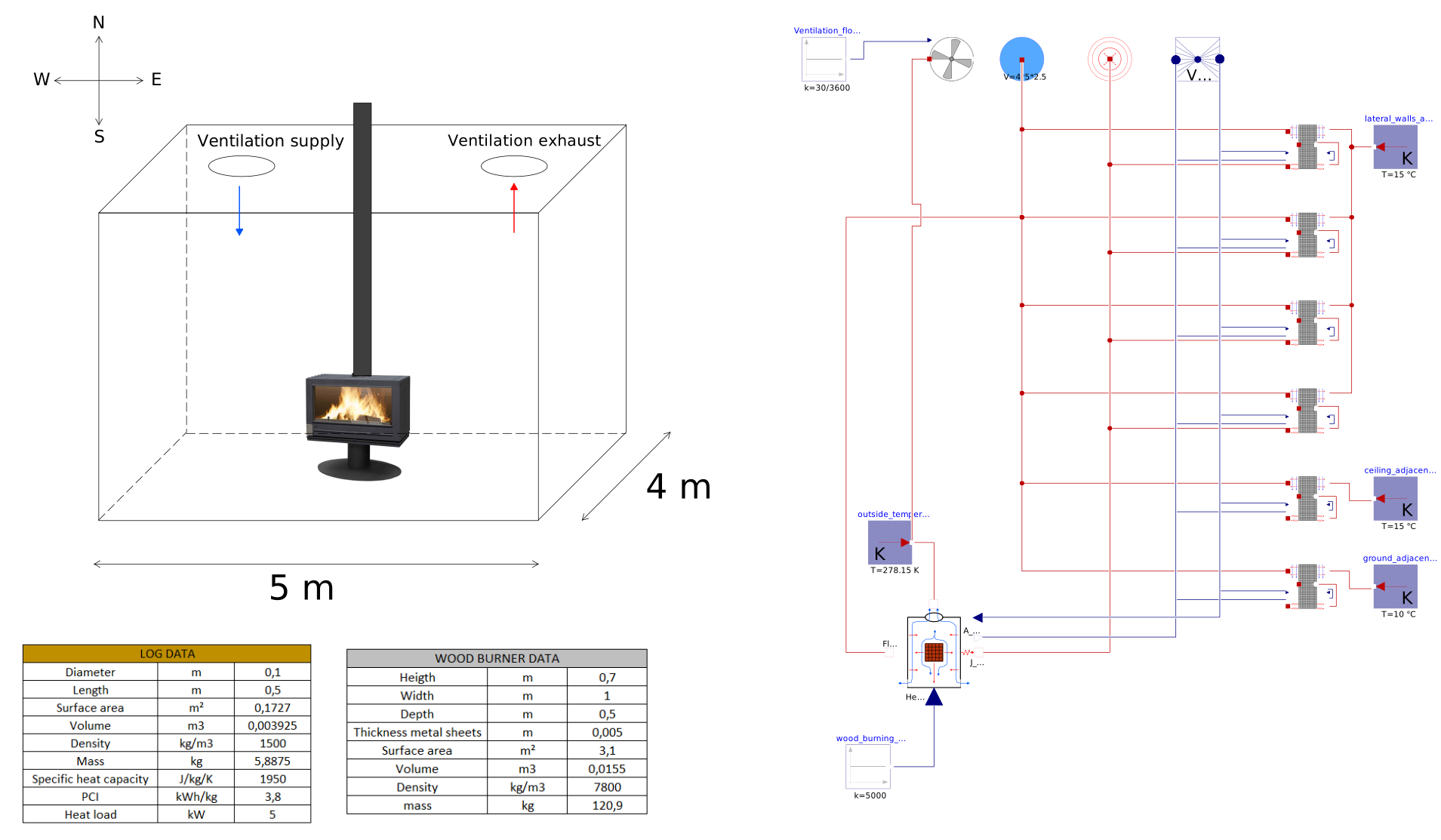
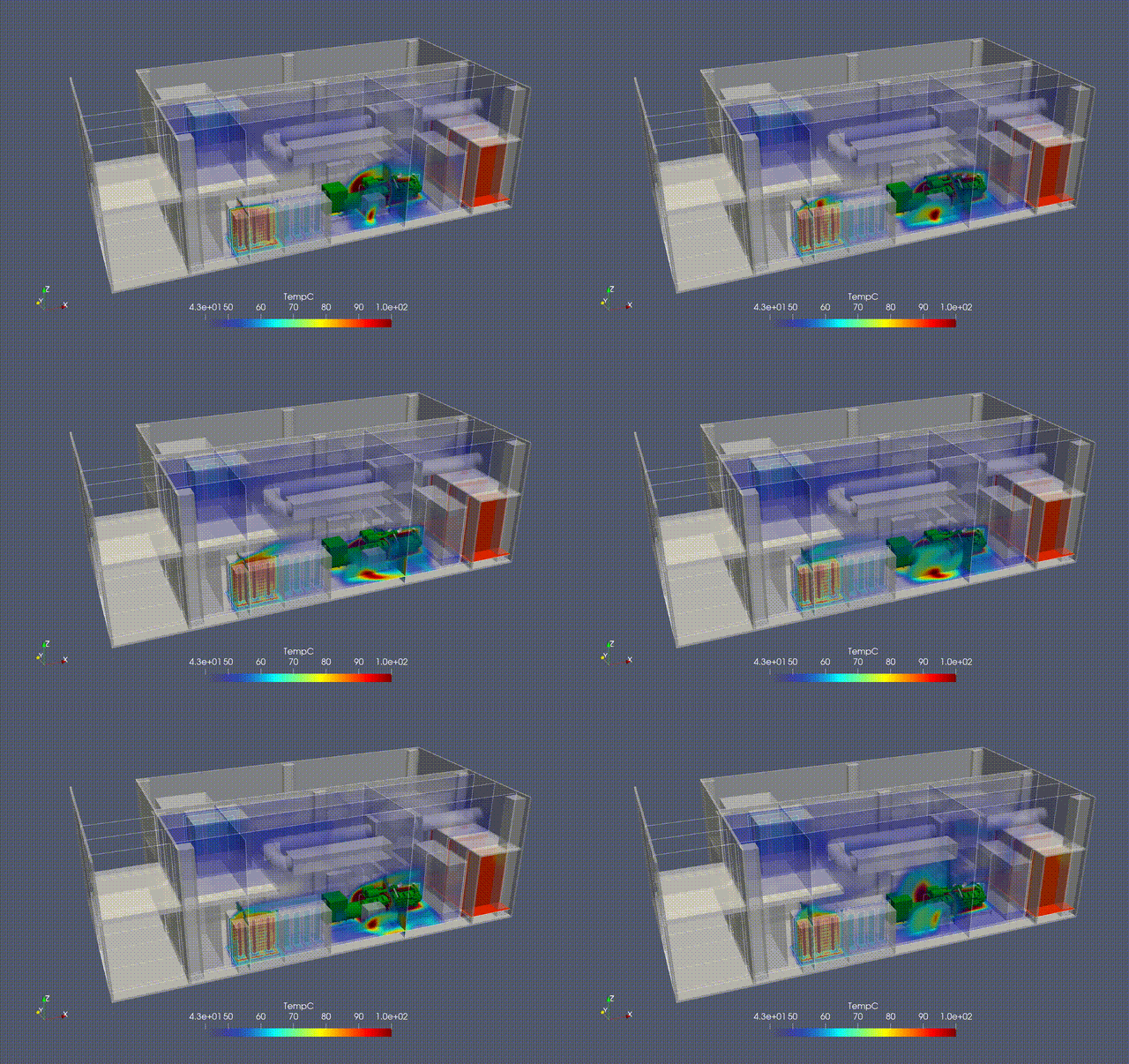
Our thermal models have helped avoid significant design modifications on nuclear installations.Fields: nuclear, data centre, industry
The quantified physical analysis of phenomena has highlighted the thermal inertias specific to the structures and equipment present in the premises.
Coupled with specifically developed tools, we were able to identify the interactions between the ventilation systems and the control-command in order to modify the logics and demonstrate with our tools the adequacy between the design and the safety requirements.
Domaines: nucléaire, datacenter, industrie
Heat Exchangers
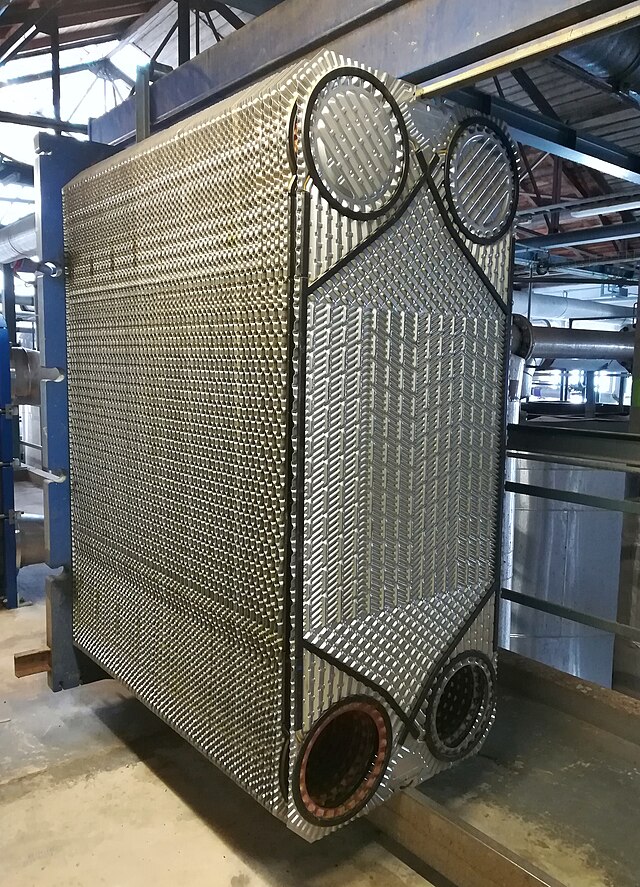
You have sized your heat exchangers but once on site, you cannot verify their performance?
We have developed and tested a method for transposing heat exchangers in order to evaluate their performance regardless of the ambient conditions.
All while taking into account all the uncertainties inherent to the numerous measurement points.
This method has allowed us to identify assembly defects (lack of a seal in a water box) even when the installation seemed to be functioning correctly due to the mild ambient temperature.
Domaines: nucléaire, industrie
Cooling Systems
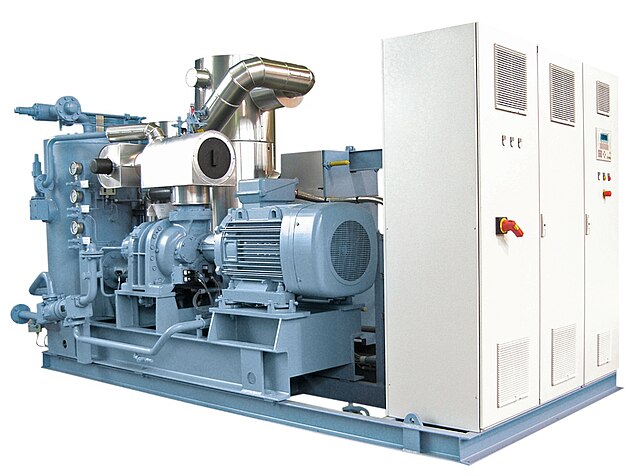
We are involved in the complete design of cooling systems, from safety requirements, specification, sizing to testing.Fields: nuclear, data centre, industry
We also model installations to verify the performance of chillers in the event of a fluid change due to regulatory developments.
Domaines: nucléaire, datacenter, industrie
Hydraulics (gas and liquid)
We size and optimise your networks for any fluid—water, air, industrial gases, or heat transfer fluids—from nominal operation through transient phases:
Pressure losses & pump curves
Calculation of operating points, sizing and selection of circulation equipment
Detection of dead zones
Identification of poorly irrigated or stagnant volumes, sources of hot spots or degradation.
Pre-setting of networks
Équilibrage des réseaux ramifiés ou maillés par positionnement optimal des vannes de réglage.
Draining & filling
Modelling the transient phases of commissioning, shutdown or maintenance of your circuits.
Travel time
Residence / transit times — Estimation of transport and mixing times, essential for plant operation and installation safety.
Aero studies
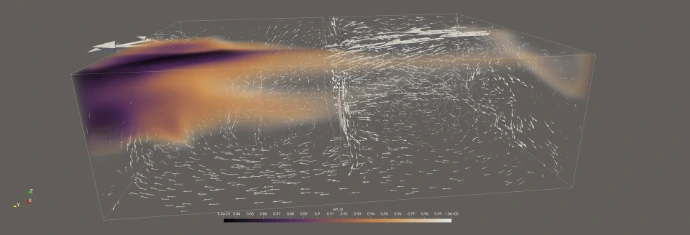
In some cases, the 0D approach is not sufficient to address an issue. This is the case for strongly 3D problems, with questions of heterogeneity and mixing: it is necessary to refine the approach.
Our models are created using code_saturne, developed by EDF's R&D. This approach allows us to script our models, our geometries, and to be responsive in case of design modification.
Domaines: nucléaire, datacenter, industrie
Backup diesel
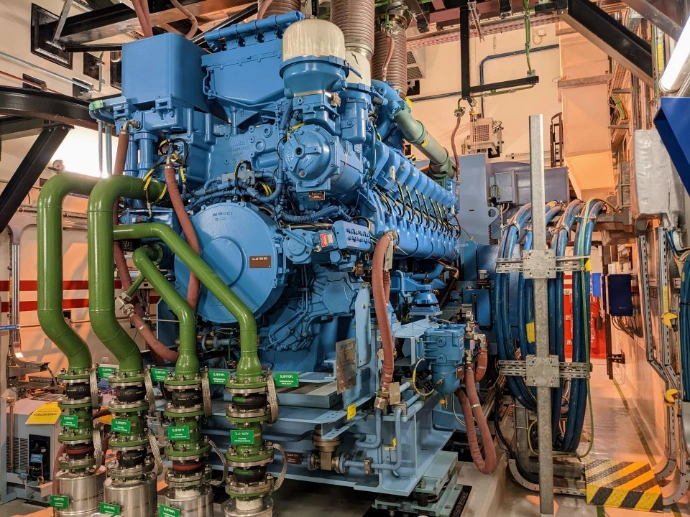
The availability and safety of installations necessitate the use of a backup power source capable of quickly taking over the load.
Backup diesels are important components of the design, requiring them to start and operate at any moment, regardless of ambient conditions. Whether the constraints are mechanical, thermal, or hydraulic, we have tools to verify the sizing of your generators, or to assist you with their selection.
Fields: nuclear, data centre, industry
Solid Mechanics
Developing capability — we are extending our expertise into structural mechanics to provide a complete multi-physics view of your systems:
Material strength
Calculation of forces, displacements and stresses. Verification of anchors and structural connections.
Vibratory analysis
Load descent, search for natural frequencies and analysis of the dynamic behaviour of structures.
Optimisation
Optimisation — Support for material selection and topology optimisation to balance performance, weight, and cost.
Multi-Physics Coupling
Our key differentiator: we model cross-discipline interactions to capture the real behaviour of your systems:
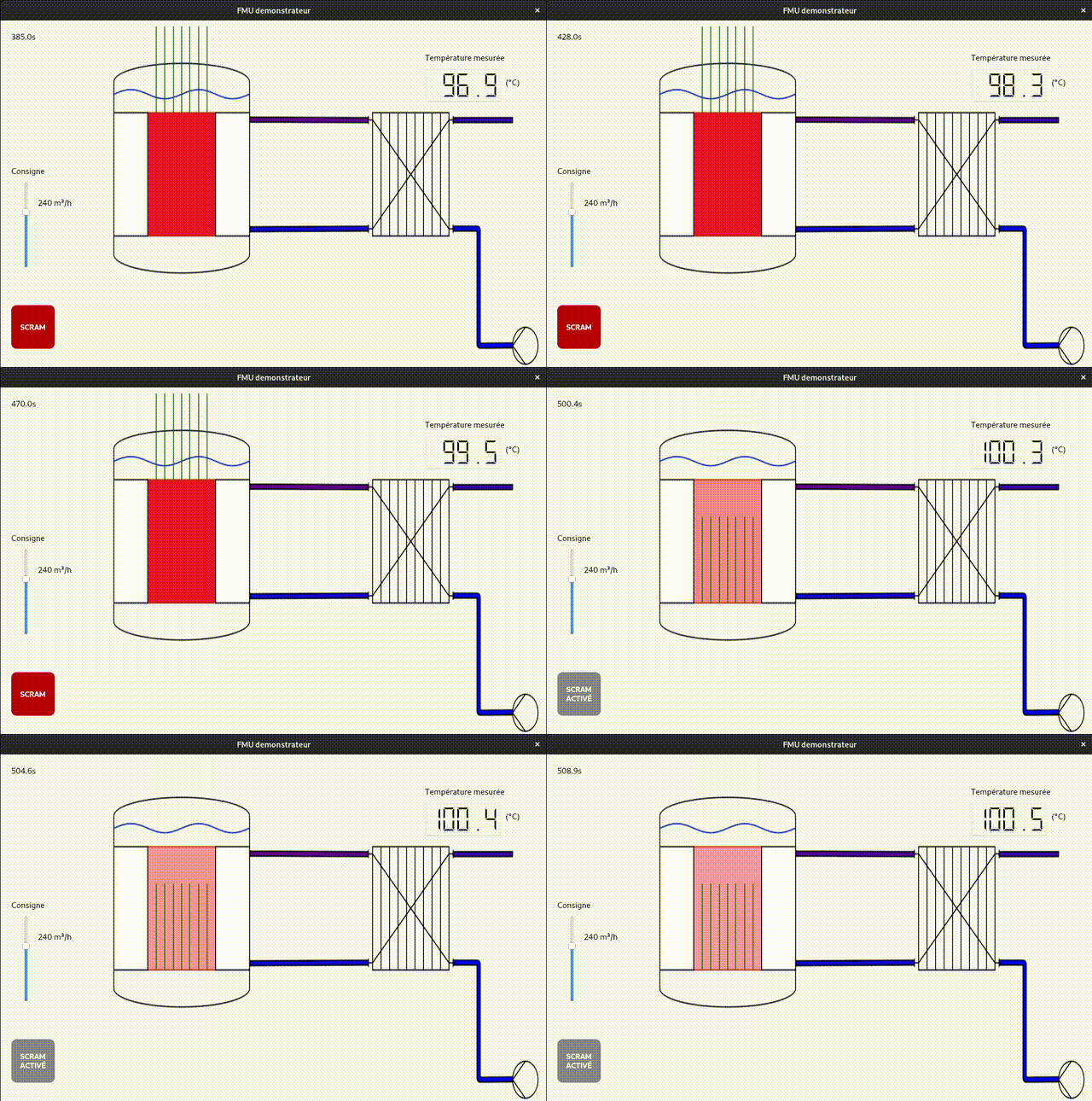
Neutronic / thermal coupling
Modelling of the feedback between neutron power and temperature field, at the heart of reactor safety.
Temperature heterogeneities
Taking into account the gradients and non-uniform distributions that condition the sizing margins.
Natural convection
Natural convection — Simulation of flows driven solely by thermal gradients, a key mechanism in passive safety.
Optimisation of regulation
Coupling control-command and process physics to adjust the control laws to the actual behaviour.
Fatigue & thermal expansion
Analysis of the mechanical stresses induced by thermal cycles: stresses, displacements, lifespan.
Heat front & mixing
Monitoring of thermal transport and mixing phenomena in networks and capacities.
Cycling air conditioning / heating
Modelling of intermittent regimes and their impact on comfort, consumption and equipment ageing.

Multi-physical coupling
Some systems are complex by nature and require an approach that couples different phenomena to be analysed.
As in the case of a primary circuit with neutronic and thermal coupling or for loops in natural convection. This approach can also be used for thermal fatigue or for coupling regulations with the dynamics of a system.
Furthermore, our 0D and 3D tools are interfaced, allowing the use of data from a 0D model as input for a 3D model.
Domaines: nucléaire, datacenter, industrie